

Questions
-
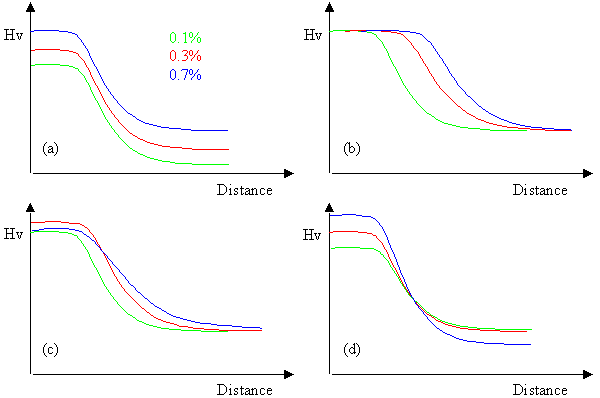
Three low alloy steels, which differ only in their carbon content (0.1, 0.3 and 0.7 wt% carbon) are characterised using the Jominy end quench test. Select the plot of hardness variation along the test specimen that best describes their behaviour.
-
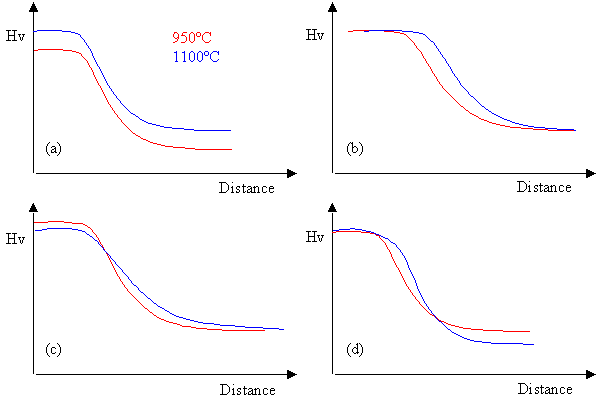
Two specimens of a low alloy steel with 0.3wt% carbon are characterised using the Jominy end quench test. One was austenitised at 950°C, and the other was austenitised at 1100°C. Select the plot of hardness variation along the test specimen that best describes their behaviour.
-
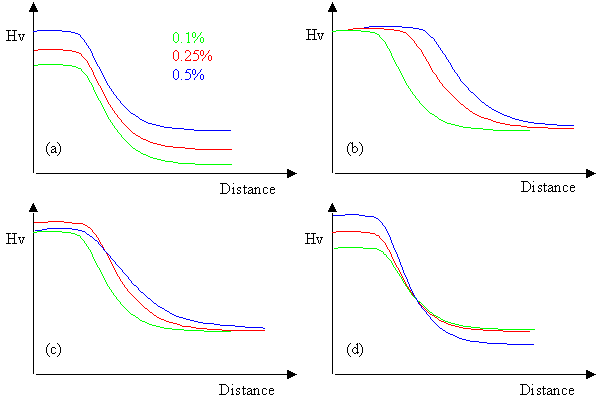
Three medium carbon steels (0.3wt%) that differ only in their Chromium content (0.25, 0.5 and 1 wt%) are characterised using the Jominy end quench test. Select the plot of hardness variation along the test specimen that best describes their behaviour.
-
You have three steels. Select the most appropriate steel to achieve the necessary levels of mechanical properties, residual stress and distortion in a 1mm diameter wood-working drill.
-
Again, you have three steels. Select the most appropriate steel to achieve the necessary levels of mechanical properties, residual stress and distortion in an injection moulding die for a mobile phone plastic case.
-
Again, you have three steels. Select the most appropriate steel to achieve the necessary levels of mechanical properties, residual stress and distortion in a tool for high speed milling of steel components.