
Piezoelectric Materials
AimsBefore you startIntroductionThe piezoelectric dipole momentPolarisationAtomic basis of non-spontaneously polarised piezoelectricsSpontaneously polarised piezoelectrics (on the atomic scale)Spontaneously polarised piezoelectrics (on the macro scale)DepolarisationApplications of piezoelectric materialsPZTSummaryQuestionsGoing furtherTLP creditsTLP contentsShow all contentViewing and downloading resourcesAbout the TLPsTerms of useFeedbackCredits Print this page
PreviousNext
Atomic basis of non-spontaneously polarised piezoelectrics
Consider quartz, SiO2. In its non-stressed state, the ions are in positions which do not allow any net dipole moment to be formed.
The structure of quartz is shown below:
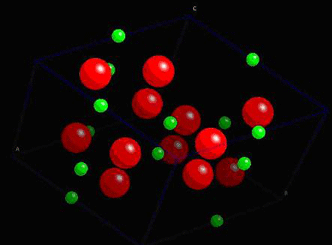
In quartz, there are tetrahedra of O atoms around Si atoms, which are able to twist and change shape when a stress is applied. The change in their position leads to the formation of net dipole moments as seen in the piezoelectric dipole moment section.
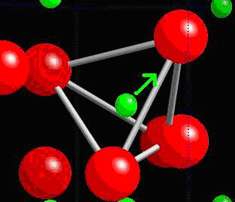
A tetrahedra of O atoms around a Si atom is marked within the quartz structure below:
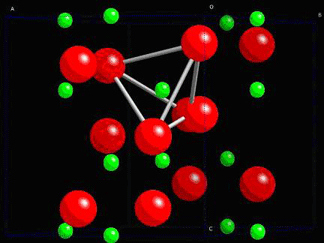
The dipole moment appears in every unit cell in the crystal and causes polarisation.