

Casting
AimsBefore you startIntroductionHeat transferHeat transfer simulationMicrostructure and segregation in castingsSand castingDie castingContinuous castingInvestment castingOther methods of castingSummaryQuestionsGoing furtherTLP creditsTLP contentsShow all contentViewing and downloading resourcesAbout the TLPsTerms of useFeedbackCredits Print this page
PreviousNext
Investment casting
Investment casting is used to make precision parts with a good surface finish. It is used to make turbine blades from a single crystal Ni-based superalloys. As the moulds are made from ceramic, metals with high melting points can be cast in this way.
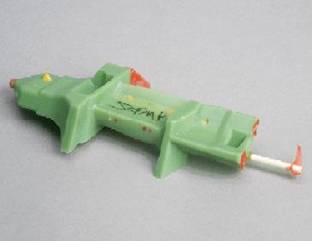
- A pattern of the required component is formed out of wax usually through injection moulding into a metal mould. A runner and gate are included within the wax pattern. Pre formed ceramic cores can also be added, so that hollow castings can be made.
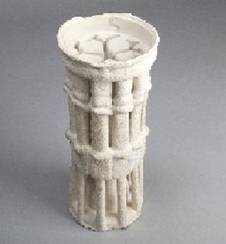
- Many wax patterns are then connected together to form a tree, and this is then dipped into a ceramic slurry, which sets through drying. Different layers of ceramic are created around the wax patterns, increasing in coarseness.
- The wax patterns are then melted out, ready for the molten metal to be poured in to create the castings.
- The ceramic mould is broken to reveal the castings, and any ceramic cores added at the start can be chemically etched out to leave a hollow structure.
 |
 |
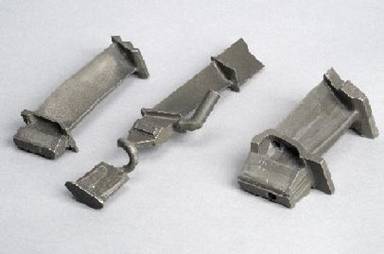 |
| Investment wax | Investment mould | Investment blades |
Video of investment casting
Advantages
- Metals with a high melting temperature can be cast due to ceramic mould
- Complex shapes can be formed by using ceramic liners in the original wax patterns
- Good surface finish can be obtained using fine ceramic material
Disadvantages
- Expensive as mould cannot be reused
- Time consuming (drying times for ceramic range roughly 24 hrs)