TLP contents
Main pages
- Aims
- Before you start
- Introduction
- The piezoelectric dipole moment
- Polarisation
- Atomic basis of non-spontaneously polarised piezoelectrics
- Spontaneously polarised piezoelectrics (on the atomic scale)
- Spontaneously polarised piezoelectrics (on the macro scale)
- Depolarisation
- Applications of piezoelectric materials
- PZT
- Summary
- Questions
- Going further
Media resources
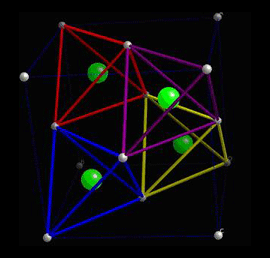
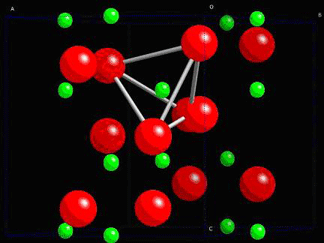
- Structure of ZnS (sphalerite) (image)
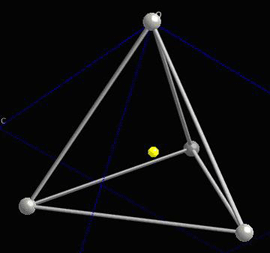
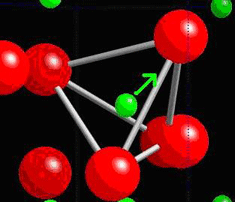
- Structure of a single tetrahedra (image)
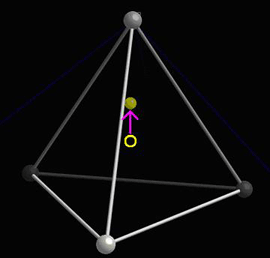
- Structure of a single tetrahedra showing the dipole moment (image)
- Structure of quartz (image)
- Structure of quartz showing dipole moment (image)
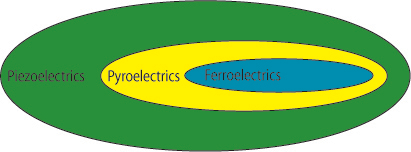
- Relationship between piezo-, pyro-, and ferroelectrics (image)
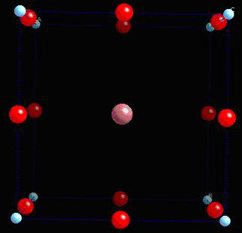
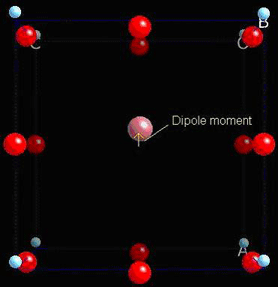
- Unit cell of BaTiO3 (image)
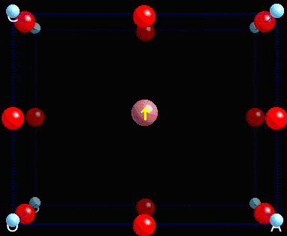
- Unit cell of BaTiO3 below 120oC (image)
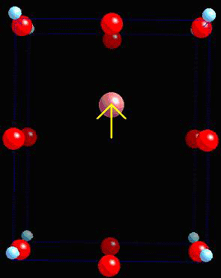
- Unit cell of BaTiO3 compressed along the x-axis (image)
- Unit cell of BaTiO3 compressed along the z-axis (image)
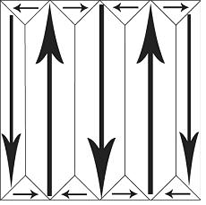
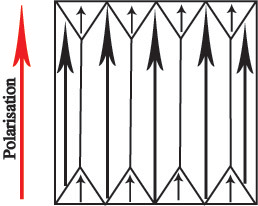
- Diagram of single crystal ferroelectric domains (image)
- Diagram of aligned single crystal ferroelectric domains (image)
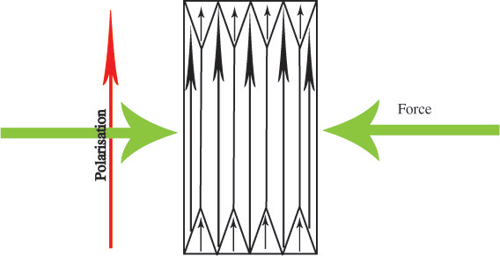
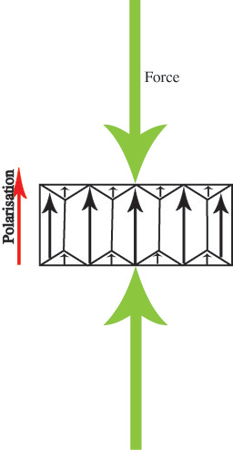
- Diagram of aligned single crystal ferroelectric domains under mechanical stress (image)
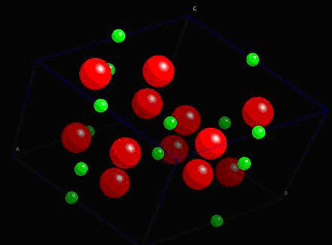
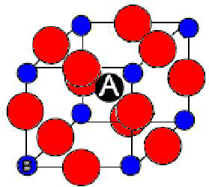
- PZT perovskite structure (image)
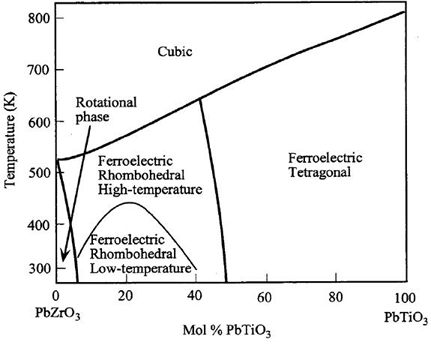
- Phase diagram (image)
- Animation showing piezoelectric compression (Flash)
- Animation showing depoling methods (Flash)
- Animation showing a how a spark is formed using piezoelectrics (Flash)
- Animation showing how ultrosound is produced using piezoelectrics (Flash)
- Interactive PZT phase diagram (Flash)

© 2004-2013 University of Cambridge.